Weight is one of the most important questions to answer before choosing a stairlift, and one of the least talked about. Every stairlift has a maximum user weight, and if you are near or above the limit of a standard model, a heavy duty stairlift is the safe and comfortable choice. The good news is that heavy duty stairlifts are widely available in the UK, they fit most normal staircases, and they usually cost only a little more than a standard model.
This guide explains stairlift weight limits, what makes a heavy duty or bariatric stairlift different, and how to make sure the one you choose is right for you.
What Is the Weight Limit on a Standard Stairlift?
Most standard stairlifts sold in the UK have a maximum user weight of between around 115kg and 136kg, which is roughly 18 to 21 stone. The exact figure depends on the manufacturer and model, and it is always shown on the specification sheet as the maximum load or rated load.
Heavy duty stairlifts raise that limit considerably. Models commonly carry users up to around 159kg (25 stone), and some go up to around 190kg (30 stone).
| Stairlift type | Typical maximum user weight | Approximate stone |
|---|---|---|
| Standard straight stairlift | 115kg to 136kg | 18 to 21 stone |
| Standard curved stairlift | 115kg to 136kg | 18 to 21 stone |
| Standing or perch stairlift | Often lower, check the model | Varies |
| Heavy duty stairlift | Up to around 159kg | Up to around 25 stone |
| Bariatric stairlift | Up to around 190kg | Up to around 30 stone |
These are typical ranges across the market rather than guarantees for any one model. Always check the stated maximum user weight of the exact stairlift you are being quoted for.
Why the Weight Limit Matters
Stairlifts are built to the BS EN 81-40 safety standard, and the rated load is a key part of that. Using a stairlift above its rated load puts extra strain on the motor, the drive gear, the batteries and the rail fixings. In the short term you may notice the lift slowing down on the climb or the batteries draining faster. Over time, it can lead to breakdowns, worn components and, in the worst case, a safety risk.
Using a stairlift above its maximum weight can also affect the manufacturer’s warranty. It is far better to choose the right model from the start than to push a standard one beyond what it was designed for.
What Makes a Heavy Duty Stairlift Different?
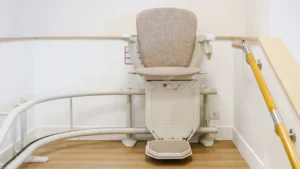
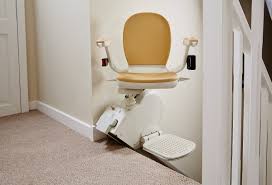
A heavy duty stairlift looks much like a standard model, but several parts are upgraded to carry more weight safely and comfortably.
- A stronger motor and gearbox to keep a smooth, steady speed on the climb.
- A reinforced rail and carriage to spread the load evenly along the staircase.
- A wider, deeper seat with more padding, which makes a real difference to comfort on every journey.
- Wider set or adjustable armrests so you are not squeezed in.
- A larger, sturdier footrest for a stable, secure position.
- Higher capacity batteries to keep the lift running reliably through the day.
If you would like to understand the moving parts in more detail, our guide on how stairlifts work explains the motor, batteries and safety sensors.
Seat Width Matters as Much as Weight
Comfort is not only about the weight limit. Many people who are well within a standard stairlift’s rated load still find the seat too narrow. A seat that is too tight makes it harder to sit down and get up safely, and it can be uncomfortable even on a short journey.
During a home survey, a good installer will check the space between the armrests and the depth of the seat against the user’s build, not just their weight. If you are between sizes, a heavy duty stairlift with a wider seat is often the better choice for comfort alone.
How to Work Out the Weight You Need
The maximum user weight covers everything the stairlift carries, not just the person. Before you get a quote, it is worth working through a few simple points.
- Use a recent, accurate weight rather than an estimate from a few years ago.
- Add a margin for clothing, shoes and anything you carry, such as a handbag, laundry basket or walking aid.
- Think ahead. If weight is likely to change because of a health condition or medication, allow room for that.
- If two people in the home will use the stairlift, choose a model rated for the heavier user.
As a rule of thumb, if the user’s weight is within about 10kg of a standard model’s limit, it is sensible to look at a heavy duty stairlift instead. Your installer should never be embarrassed to ask, and you should never feel awkward telling them. It is simply part of making the stairlift safe.
Will a Heavy Duty Stairlift Fit My Stairs?
In most homes, yes. Heavy duty straight stairlifts fit the same kind of staircases as standard models. Because the seat and carriage are a little wider, they take up slightly more of the stair width, so very narrow staircases need careful measuring. Our guide to a stairlift for narrow stairs explains the measurements that matter, including how much space must be left for others to use the stairs.
The staircase itself also needs to be sound. A domestic timber or concrete staircase in good condition will normally take a heavy duty rail without any problem, as the rail is fixed to the treads and the load is spread along its length. Any loose or damaged treads will be spotted and discussed during the survey.
Heavy Duty Curved Stairlifts
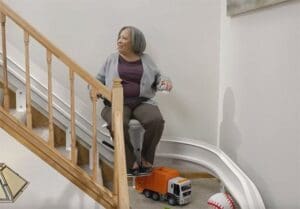
Heavy duty options are most widely available for straight staircases. Bariatric curved stairlifts do exist, but the choice is narrower, as the made to measure rail and carriage need to cope with both the bends and the extra load. If your staircase has a turn or a half landing, mention the user’s weight at the very first enquiry so you are only shown models that are genuinely suitable.
How Much Does a Heavy Duty Stairlift Cost?
A heavy duty version of a straight stairlift usually adds a few hundred pounds to the price of the standard model. With a new straight stairlift typically costing between £2,000 and £4,000 installed, a heavy duty straight stairlift will normally sit towards the upper end of that range or a little above it. Heavy duty curved stairlifts cost more, in line with the higher price of curved models generally.
The same funding options apply as for any stairlift. A stairlift for someone with a chronic illness or disability is zero rated for VAT, and a Disabled Facilities Grant from your local council can cover some or all of the cost. You can compare prices across every type on our stairlift costs page.
Can You Get a Reconditioned Heavy Duty Stairlift?
Sometimes. Reconditioned heavy duty straight stairlifts do become available, but stock is more limited than for standard models. If one is offered, ask to see the model number and its rated load, and make sure it comes with a warranty. Our page on reconditioned stairlifts explains what to check.
Frequently Asked Questions
What is the maximum weight for a stairlift in the UK?
Standard stairlifts usually carry between around 115kg and 136kg. Heavy duty and bariatric models are available for users up to around 159kg, and some up to around 190kg.
What happens if you are too heavy for a stairlift?
Using a stairlift above its rated load strains the motor and rail, can cause breakdowns and may affect the warranty. The safe answer is to choose a heavy duty model rated for the user’s weight with a sensible margin.
Are heavy duty stairlifts slower?
Not noticeably. They have stronger motors designed to keep a steady, comfortable speed at their full rated load.
Can a heavy duty stairlift be rented?
Rental stock is mostly standard straight models, so heavy duty rental is less common. It is worth asking, but buying new or reconditioned is usually the more reliable route.
Get the Right Stairlift First Time
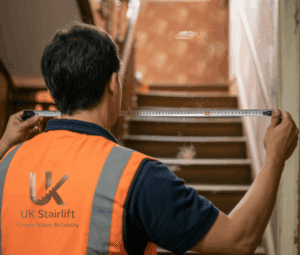
Choosing a stairlift that matches the user’s weight and build is the single best way to make sure it is comfortable, reliable and safe for years. Book a free home assessment and we will measure your stairs, talk through seat sizes and weight limits in confidence, and recommend a stairlift that genuinely fits.