Most people only think about stairlifts in terms of price. Fair enough, it is usually the first question. But understanding what is actually happening inside that rail and seat unit makes it much easier to choose the right model, spot a problem early, and know what a good installer should be checking. Here is what is really going on when you press that button and glide up the stairs.
The Basic Parts of Every Stairlift
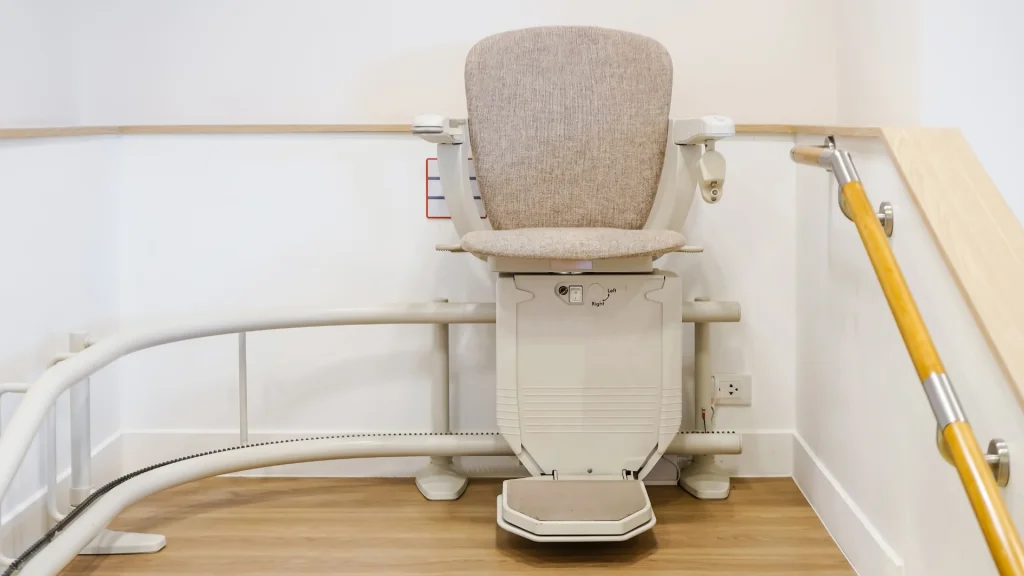
Strip away the upholstery and every stairlift, straight or curved, is built from the same core components.
The rail. This is the aluminium track fixed to the treads of your staircase, not the wall. It carries the full weight of the carriage and the user, so it is bolted directly into the structural part of the stairs.
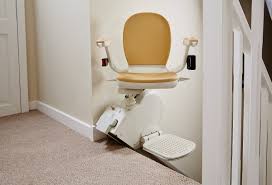
The carriage. This is the unit that holds the seat, footrest and armrests, and travels along the rail. On most models it folds flat against the wall when not in use, so the stairs stay clear for everyone else in the house.
The drive system. Underneath the carriage sits a motor connected to a gear that runs along a toothed strip on the rail, known as a rack and pinion system. This is what actually pulls the carriage up and down, smoothly and at a fixed, controlled speed.
The controls. A simple toggle or joystick on the armrest, usually duplicated at the top and bottom of the stairs so the lift can be called back when it is not with you.
Straight vs Curved Stairlifts: What Is Mechanically Different
A straight stairlift runs on a standard length rail, manufactured to a set of common sizes and cut to fit on the day of installation. That is a big part of why straight stairlifts are quicker to fit and cheaper than curved ones.
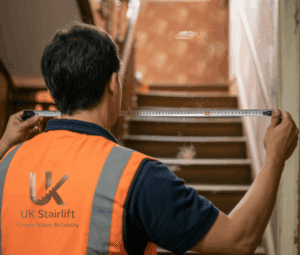
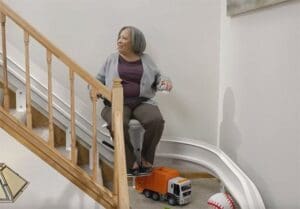
A curved stairlift needs a rail bent to match the exact shape of your staircase, including any half landings, turns or changes in width. An engineer surveys and measures your stairs first, then the rail is custom made off site before installation. Mechanically the drive system works the same way, the difference is entirely in how the rail itself is manufactured.
How Stairlifts Are Powered
Almost all stairlifts run on rechargeable batteries rather than drawing mains power directly while in motion. Charging points are fitted at the top and bottom of the rail, and the carriage tops up its charge automatically whenever it is parked at either end.
This battery led design is a safety feature in itself. It means the stairlift keeps working during a power cut, which matters a great deal if someone relies on it to get up or down safely. Batteries typically last three to five years before they need replacing, and a stairlift that is losing charge more quickly than usual is one of the clearest early signs something needs attention.
The Safety Features Built Into Every Modern Stairlift
A stairlift is a piece of safety equipment first and a convenience second, and the engineering reflects that.
Obstruction sensors. Small sensors on the footrest and sometimes the carriage itself detect anything in the path of the rail, whether that is a stray shoe or a curious pet, and stop the lift immediately rather than pushing through.
Seatbelt. Every stairlift is fitted with a seatbelt as standard, and the lift will not operate unless it is fastened.
Swivel seat. At the top of the stairs the seat rotates outward, so the user steps off facing away from the staircase rather than having to turn on the spot near the top step.
Key switch. Most models include a lockable key switch, letting a family control who can operate the lift, which matters in households with young children.
Soft start and stop. The motor accelerates and decelerates gradually rather than jerking into motion, reducing the risk of a sudden movement unsettling the user.
Weight and fold sensors. The lift will not run if the footrest is folded up or if the seat is empty in some configurations, preventing it from being sent up and down unnecessarily or unsafely.
What Keeps a Stairlift Safe and Compliant
None of this is left to individual manufacturers to decide for themselves. Stairlifts sold and installed in the UK must meet BS EN 81-40:2020, the British and European safety standard covering the construction and installation of stairlifts specifically. It sets out requirements for exactly the features above, from obstruction detection to safe braking in the event of a power failure.
If you want to understand more about how the industry regulates itself beyond that baseline standard, the British Healthcare Trades Association’s Stairlifts and Access section publishes independent consumer guidance on what to look for and how to buy safely, written by manufacturers and installers across the industry.
Outdoor Stairlifts: Extra Engineering Considerations
An outdoor stairlift works on the same basic principle but with weatherproofing built into every component. The rail, motor housing and electrics are sealed against rain and damp, the seat and controls are made from weather resistant materials, and a cover is usually supplied to protect the unit when it is not in use. Because it faces a much wider temperature range than an indoor model, the battery and motor are also specified to cope with UK winters without losing performance.
Keeping It Working Properly
Understanding the mechanism also explains why regular servicing matters. Rail joints, the drive gear and the battery all wear gradually with use, and a yearly check catches the small issues before they become a breakdown. We have covered exactly what a service involves and how often you need one in our stairlift maintenance and servicing guide.
If you are further along and weighing up models and prices, our guide to how much a stairlift costs breaks down what drives the price up or down. Or if you would rather talk it through, get in touch and we will arrange a free, no obligation home survey.