If you rent your home, getting a stairlift fitted can feel more complicated than it needs to be. Who pays for it? Does the landlord have to agree? What happens to the stairlift if you move out? Whether you live in a council house, a housing association property or a privately rented home, the good news is that tenants have real rights here, and in many cases the stairlift can be fitted at little or no cost to you.
This guide walks through exactly how getting a stairlift in a council house or rented home works in the UK, step by step, so you know who to speak to first and what to expect.
Can You Get a Stairlift in a Council House?
Yes. Council tenants can have a stairlift installed, and councils fit thousands of them every year. In most cases the council, as your landlord, arranges and pays for the adaptation once an occupational therapist has confirmed it is needed. Many councils fund adaptations to their own homes directly from their housing budget rather than through a separate grant, which can make the process quicker than it is for homeowners.
The exact route varies from council to council, but the starting point is almost always the same: an assessment of your needs.
Step One: Ask for an Occupational Therapy Assessment
Contact the adult social care team at your local council and ask for an occupational therapy (OT) assessment. You can refer yourself, or a GP, family member or carer can do it on your behalf. An occupational therapist will visit your home, look at how you manage the stairs and recommend the adaptations that would help.
The OT report matters because it is the document councils and housing associations rely on when deciding whether to fund a stairlift. It may also recommend smaller changes first, such as a second stair rail or grab rails. In England, minor aids and adaptations costing under £1,000 are provided free of charge, but a stairlift costs more than that, so it is normally handled as a major adaptation.
Waiting lists for OT assessments can be long in some areas. If you are struggling with the stairs in the meantime, tell the council clearly, as urgent cases are often prioritised. Our guide on whether you need a stairlift covers the warning signs worth mentioning.
Housing Association Tenants: How It Works
Housing associations handle stairlift requests in one of two ways. Some have their own adaptations budget and will fund the stairlift directly once they have an OT recommendation. Others ask the tenant to apply to the local council for a Disabled Facilities Grant, with the housing association giving its consent as the property owner.
Your housing association’s tenancy handbook or website should explain its adaptations policy. If not, ring your housing officer and ask directly. It is a routine request and they will be familiar with it.
Private Tenants: Getting a Stairlift in a Rented Home
Private renters can get a stairlift too, but you will need your landlord’s permission before anything is fitted, because the work alters their property. Many private tenants worry that asking will cause problems, but the law is on your side.
Under section 190 of the Equality Act 2010, which applies in England and Wales, a landlord must not unreasonably refuse consent for a disabled tenant to make an improvement that is likely to be needed because of their disability. If a landlord refuses without a good reason, the refusal can be treated as unreasonable. A landlord is allowed to attach reasonable conditions though, such as asking for the property to be returned to its original condition when you leave.
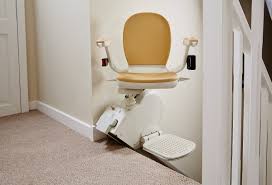
In practice, most landlords agree once they understand what is involved. A useful point to make is that a stairlift rail is fixed to the stair treads, not the wall, so it causes very little damage and can be removed cleanly. The screw holes left behind are small and easy to fill.
How to Ask Your Landlord
- Put the request in writing, by email or letter, so there is a clear record.
- Explain why the stairlift is needed and include the OT recommendation if you have one.
- Confirm the stairlift will be fitted by a qualified installer to the BS EN 81-40 safety standard.
- Point out that the rail fixes to the stairs rather than the walls and can be removed when you leave.
- Offer to have it removed at the end of the tenancy, which often settles any concerns straight away.
Who Pays for a Stairlift in a Rented Home?
This is where tenants are often pleasantly surprised. A Disabled Facilities Grant is not just for homeowners. According to GOV.UK, tenants can apply too, as long as the disabled person intends to live in the property for the grant period, which is currently five years. Landlords can also apply on a tenant’s behalf.
| Your situation | Who usually pays | First step |
|---|---|---|
| Council tenant | The council, from its housing budget | Ask adult social care for an OT assessment |
| Housing association tenant | The housing association, or a Disabled Facilities Grant | Speak to your housing officer and request an OT assessment |
| Private tenant | A Disabled Facilities Grant, or self funded | Get written consent from your landlord, then apply for a DFG |
| Short term need | Self funded rental | Ask about stairlift rental |
The maximum Disabled Facilities Grant is £30,000 in England, £36,000 in Wales and £25,000 in Northern Ireland. Scotland runs a different system through local councils, with grants for essential adaptations normally covering at least 80% of the cost. A straight stairlift typically costs between £2,000 and £4,000 installed, so it sits comfortably within these limits. Grants for adults are means tested, so your income and savings will affect how much you receive, but grants for disabled children are not.
If you are paying yourself, remember that a stairlift for someone with a chronic illness or disability is zero rated for VAT, which takes a sizeable amount off the price. You can see typical prices on our stairlift costs page.
Renting a Stairlift Instead of Buying
If you are a private tenant and do not expect to stay in the property long, or you only need help with the stairs while recovering from an operation, renting a stairlift can make more sense than buying. You pay an installation fee and a weekly or monthly charge, and the stairlift is taken away when you no longer need it. That also makes the conversation with your landlord easier, as there is a clear end date. Find out more in our guide to the cost of renting a stairlift in the UK.
A reconditioned stairlift is another good option for tenants paying their own way, offering a lower price with a warranty, and it can be resold or removed when you move.
What Happens to the Stairlift When You Move Out?
This depends on who paid for it. If the council or housing association funded the stairlift, it belongs to them and stays with the property, or is removed and reused. Many councils run recycling schemes so that a stairlift can be refurbished and fitted for another tenant on a straight staircase.
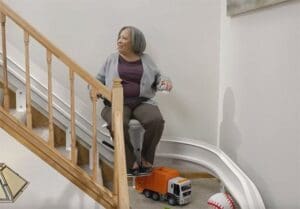
If you paid for the stairlift yourself in a privately rented home, it is your property. You can take it with you, sell it or have it removed, depending on what you agreed with your landlord. Straight stairlift rails can sometimes be refitted in a new home if the staircase is a similar length, while curved rails are made to measure for one staircase and rarely move with you. Our stairlift removal service can take it out neatly at the end of your tenancy.
Who Is Responsible for Repairs and Servicing?
When the council or housing association owns the stairlift, they are normally responsible for servicing and repairs, and you should report faults to them in the same way you would report a broken boiler. Many landlords hold a maintenance contract with an approved stairlift company.
If you own the stairlift, servicing is your responsibility. An annual service is recommended to keep it safe and reliable, and our stairlift maintenance guide explains what is involved and what it typically costs.
Frequently Asked Questions
Can my landlord refuse a stairlift?
A landlord can refuse only if they have a genuinely good reason. In England and Wales, the Equality Act 2010 says consent for disability related improvements must not be unreasonably withheld. They can, however, set reasonable conditions such as removal at the end of the tenancy.
How long does it take to get a stairlift from the council?
It varies widely between areas. The OT assessment is often the longest wait, and the whole process can take anywhere from a few weeks to several months. Fitting the stairlift itself usually takes just a few hours, as covered in our guide on how long stairlift installation takes.
Can I pay for my own stairlift in a council house?
Yes, but you still need the council’s permission before it is fitted. Council tenants have a right to make improvements with consent, which should not be unreasonably refused. Paying privately can be much faster than waiting for a funded adaptation.
Will a stairlift damage my rented home?
Very little. The rail is bolted to the stair treads rather than the wall, and when it is removed only small screw holes remain, which are easily filled.
Get Free, Impartial Advice
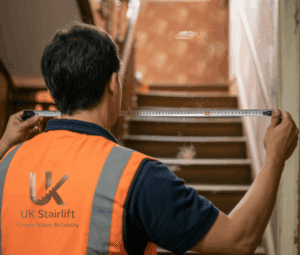
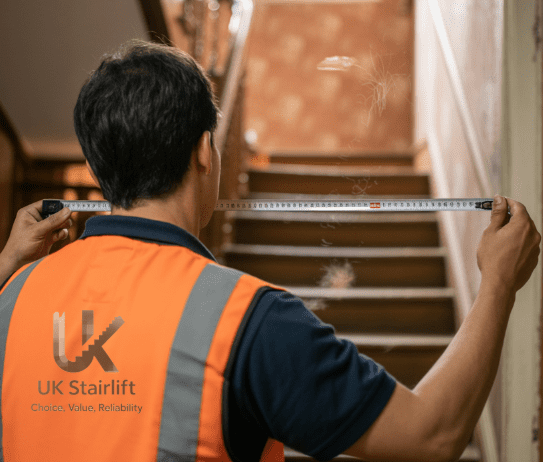
Whether you are waiting on the council, talking to your landlord or weighing up paying privately, we are happy to help. Book a free home assessment and we will measure your stairs, explain your options and give you a clear written quote you can share with your landlord or council.