Some mornings the stairs are fine. Other mornings the first step feels like a negotiation with your knees, and by the landing your hands ache from gripping the banister. If that sounds familiar, a stairlift for arthritis deserves a proper look before a fall makes the decision for you.
Arthritis changes the brief. It flares and settles, so the stairlift you need on a good day is not the one you need on a bad day. That shapes almost every choice below.
Why does arthritis change what you need from a stairlift?
Most stairlift advice assumes a steady, predictable need. Arthritis is rarely like that. Pain and stiffness can sit in the knees, the hips, the hands or the shoulders, sometimes all at once, and they vary from week to week.
Each problem joint affects a different part of the journey. Sore knees make sitting down and standing up the hard part. Sore hands make the controls and the seatbelt buckle the hard part. A model that suits someone with weak legs but strong hands may frustrate someone whose hands are the real issue.
So before you look at a single brochure, write down where it hurts and when. A week of notes is plenty. Include the worst moment of each day, because that is the moment the stairlift has to cope with. If you are still weighing up whether you need one at all, our guide on whether you need a stairlift covers the warning signs.
Which seat features make sitting down and standing up easier?
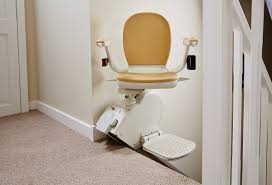
Start with the seat, because you will use it twice on every trip. A seat that sits at a comfortable height means less bending and less pushing up through painful knees. Ask whether the height can be adjusted when the stairlift is fitted, and whether the armrests give you something solid to push from.
At the top of the stairs, the swivel seat matters more than most people expect. It turns outwards so you step off facing the landing, rather than twisting your hips and shuffling sideways beside a drop. For stiff hips, that small rotation removes a surprisingly awkward movement. We explain the parts in how stairlifts work, including the seatbelt that must be fastened before the lift will move.
That seatbelt is worth testing in person. A buckle that is easy for strong fingers can be miserable for sore ones. Ask to try it, and try it with the hands you have on a bad day, not the ones you have on a good day.
Think about the footrest and the folded position too. On most models the carriage folds flat against the wall when not in use, which keeps the stairs clear for a walking stick, a frame or another person. Check that you can fold the seat and footrest yourself without a painful twist or reach. If you cannot, ask what the alternatives are.
What about the controls if your hands are stiff?
Controls are usually a toggle or a joystick on the armrest, with call controls at the top and bottom of the stairs so the lift can be sent back to you. Both types work well for most people. Neither is automatically right for painful hands.
Hold each one. Notice how much grip it needs, how far your wrist has to bend, and whether your thumb can operate it without strain. If a control hurts to use in the showroom, it will hurt more at seven on a cold morning.
Tell the surveyor about your hands early. Manufacturers offer different control styles and options, and the right one depends on the model you choose, so it helps to raise the question before anything is ordered rather than after the lift is on the stairs.
Would a standing stairlift suit sore knees better?
Possibly. Some people with arthritic knees find it easier to stay upright than to bend into a seat, and a standing stairlift is built for exactly that. You lean against a support and ride up on a platform. Our page on standing stairlifts explains who they are designed for.
There is a trade-off. Standing for the whole ride needs reasonable balance and leg strength, and that can vary with your symptoms. If a bad day leaves you wobbly, a seated model may be the safer choice. Be honest about your worst days here. A stairlift that only works when you feel well is not doing its job.
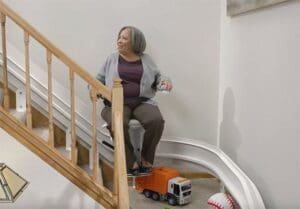
The shape of your staircase also matters. A straight run uses a standard rail, and a staircase with turns needs a custom one, which changes the price and the lead time. Our straight and curved stairlift pages show the difference.
How do you plan for days that are worse than today?
Arthritis can change over the years, so choose with the next few years in mind as well as this month. Think about which features would still work if your hands weakened or your knees stiffened further. A model you can adapt is a better bet than one that suits only today.
Cost and funding belong in this conversation too. Our overview of stairlift costs sets out what drives the price, and the Disabled Facilities Grant guide explains how grant support works and who can apply. Eligibility depends on your circumstances and where you live, so check before you assume either way.
If someone else in the house has different needs, mention that as well. The stairlift has to work for the whole household, not only for you.
Book a free assessment and bring your bad-day list
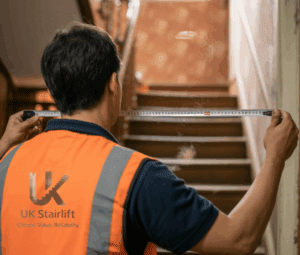
The easiest way to find out what suits you is to have someone look at your stairs and listen to how you move. Book a free stairlift assessment and tell us about your mobility needs, including the awkward details: the stiff hands, the slow knees, the mornings you would rather not climb at all.
Bring your notes from the last week. They show what the stairlift actually has to cope with, and they help you choose a stairlift that still works when you need it most.