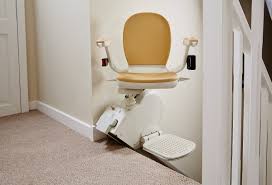

Most people ringing round for stairlift quotes never ask about funding. They assume it’s a straight purchase, get a price of two or three thousand pounds, and either find the money or put the decision off. Yet a working share of UK households never need to pay full price, because a stairlift counts as a home adaptation, and home adaptations for a disabled or elderly occupant come with genuine funding routes attached.
None of these routes are secret. They’re just scattered across council websites, HMRC manuals and charity pages that rarely mention each other. This guide pulls the main three, Disabled Facilities Grants, VAT relief, and charitable funding, into one place, with what each one actually covers and where it falls short.
What Is a Disabled Facilities Grant?
A Disabled Facilities Grant, usually shortened to DFG, is a mandatory grant that local councils in England must provide to help disabled people adapt their homes. It isn’t discretionary in the way some council support is. If you meet the criteria, the council has a legal duty to help. Stairlifts sit comfortably within scope, alongside wet rooms, ramps, widened doorways and other changes that let someone stay in their own home safely.
The maximum grant in England currently stands at £30,000. A straight stairlift, even a new one, typically costs somewhere between £2,000 and £4,000 installed, so a single stairlift application rarely comes close to that ceiling. The full amount matters more to households needing several adaptations at once, such as a stairlift plus a downstairs bathroom conversion.
Scotland and Wales run comparable schemes under different names and different limits, usually administered through the local Home Improvement Agency or Care and Repair service rather than the council directly. If you’re outside England, the eligibility principles below still broadly apply, but check the figure with your own local scheme before budgeting around it.
Who Actually Qualifies
Three conditions need to line up. First, the person the stairlift is for has to be disabled under the Equality Act definition, which covers a much wider range of conditions than people expect. Arthritis, a heart condition that limits exertion, a stroke, Parkinson’s, or a permanent mobility impairment from an injury can all qualify, not just registered disabilities. Second, an occupational therapist has to assess the home and confirm the stairlift is necessary and appropriate, usually arranged through adult social services. Third, the work has to be reasonable and practical for that particular property.
Applications from parents on behalf of a disabled child skip the means test entirely. For adults, the grant is means-tested, and this is the part that puts people off applying before they’ve actually checked their numbers.
How the means test actually works
This is the single most misunderstood part of the whole process. The means test doesn’t decide whether you qualify for a grant. It decides how much of the cost you’re asked to contribute yourself. Fail to understand that distinction and you’ll talk yourself out of applying for no reason.
The council looks at household income and savings above £6,000. If you or your partner already receive means-tested benefits such as Pension Credit, Universal Credit or Income Support, you automatically pass with no financial contribution required. Above that, a formula calculates what the council believes you can reasonably put towards the work, and the grant covers the rest, up to the £30,000 cap. Plenty of people who assume they’ll be asked to pay thousands end up contributing very little, or nothing at all, once the calculation actually runs.
Our guide on whether you need a stairlift covers the practical side of this same assessment, since it’s often the same occupational therapist visit that establishes both need and grant eligibility in one go.
Applying, Step by Step
Contact adult social services at your local council and ask for a home assessment. Don’t apply to the housing or grants department first. The occupational therapist visit comes before the paperwork, not after, because the whole application hinges on their recommendation.
Once the OT confirms a stairlift is appropriate, the council’s grants team sends the formal application, along with the financial assessment forms if you’re not already on a passporting benefit. You’ll typically need proof of income, savings, and identity for everyone in the household. Get quotes from installers at this stage too. Some councils want two or three quotes attached to the application rather than approving a figure and letting you shop afterwards.
Timelines vary enormously by council, and this is the part that catches people out. Some areas turn an application around in six to eight weeks. Others, particularly in high-demand urban councils, can take the better part of a year from first enquiry to installed lift. If mobility is deteriorating and waiting isn’t realistic, it’s worth asking the OT directly whether an interim solution exists while the grant works its way through the system.
VAT Relief: The Route Most People Miss
Here’s the funding option that has nothing to do with council waiting lists, isn’t means-tested, and most installers won’t mention unless you ask. If you’re chronically sick or disabled, stairlifts are zero-rated for VAT. Not reduced. Zero. On a stairlift priced at £2,500, that’s £500 back immediately, simply by claiming the relief at the point of sale.
The definition HMRC uses is broader than most people assume. You qualify if you have a physical or mental impairment with a long-term, substantial effect on your ability to carry out everyday activities. There’s no requirement to be registered disabled, and no GP letter or medical evidence needed. You simply complete a self-declaration form with the installer at the time of purchase, confirming your condition in your own words.
Two things matter here. Claim it before you pay, because VAT isn’t refundable retrospectively once the sale has gone through. And know that repairs and servicing on a stairlift originally bought VAT-free stay zero-rated too, for as long as the same eligible person uses the lift, which adds up over several years of maintenance.
Aged 60 or over but don’t meet the disability definition? A separate relief brings VAT down to 5 percent instead of the standard 20 percent on the supply and installation, though in this case servicing afterwards reverts to the full rate. Either way, ask before you sign anything. It costs nothing to check and the saving is immediate.
Charitable and Local Funding
Below the council and HMRC layer sits a patchwork of smaller funding that’s worth knowing about, particularly if a DFG application is going to take months and money is genuinely tight in the meantime. Local Home Improvement Agencies, sometimes trading as Care and Repair or Foundations depending on the region, often hold small discretionary grants or interest-free loans specifically for mobility adaptations. Some Rotary clubs and Lions clubs fund single pieces of equipment for local residents on a case by case basis. Age UK’s local branches sometimes know about funding pots that never make it onto a national website.
None of these replace a DFG, and none come with guarantees. But a phone call costs nothing, and for households stuck between “needs a stairlift now” and “the council grant won’t land for months,” it’s often the difference between managing and not.
One route that doesn’t apply here, worth ruling out early so you don’t waste time chasing it: Motability covers vehicles, not home adaptations. It’s a common assumption and an understandable one, but stairlifts sit entirely outside its scope.
What This Means for Your Budget
Stack these together and the real cost of a stairlift looks very different from the sticker price. VAT relief alone knocks a fifth off. A successful DFG application, depending on your household finances, can cover most or all of the remainder. Even a partial contribution from the means test, combined with the VAT saving, changes the maths considerably compared with paying full retail with no funding applied at all.
If funding isn’t going to stretch far enough or the timeline doesn’t work for your situation, it’s still worth comparing what a reconditioned stairlift costs against a new one, since the gap between the two options is often larger than people expect. And if you haven’t had a straight answer on what you’re actually likely to pay before grants and VAT relief are applied, our breakdown of stairlift costs covers current UK pricing in more detail, including how curved staircases change the number, which we’ve also covered separately in our guide to curved stairlift costs.
A free home assessment is the fastest way to find out where you actually stand, both on suitability and on price, before any funding application goes in. You can book one here with no obligation attached.
Frequently Asked Questions
Can I get a free stairlift on the NHS?
Not directly. The NHS doesn’t fund or install stairlifts itself. Funding runs through your local council via a Disabled Facilities Grant, following an occupational therapist assessment, which is usually arranged through social services rather than your GP.
How long does a DFG application take?
Anywhere from six weeks to close to a year, depending entirely on your council’s current caseload. Ask your OT for a realistic local timeline rather than relying on national averages, since the variation between councils is significant.
Do I need to be registered disabled for VAT relief?
No. HMRC’s definition covers anyone with a long-term physical or mental impairment that substantially affects daily activities. You self-declare on a simple form at the point of sale, with no medical evidence or formal registration required.
What if my council turns down my application?
You can ask for the decision to be reviewed, and in some cases appeal formally. Councils have a mandatory duty to provide DFGs to those who meet the criteria, so a refusal is worth challenging rather than accepting immediately, particularly if the reasoning given seems to rest on a misunderstanding of your circumstances.