
Choosing a local stairlift installer involves more than simply finding the nearest company.
The quality of installation directly affects safety, reliability, and longevity of your stairlift. This makes it essential to select an experienced, reputable professional who meets industry standards.
Essential Qualifications and Certifications
A reputable stairlift installer should hold relevant qualifications demonstrating their competence. Look for membership in trade associations such as the British Healthcare Trades Association (BHTA), which requires members to adhere to codes of practice and maintain professional standards.
These organisations provide recourse if issues arise. They indicate a commitment to quality workmanship.
Installers should also carry appropriate insurance, including public liability cover of at least £5 million and employer’s liability insurance if they have staff. Request proof of these policies before agreeing to any work. Additionally, check whether installers have electrical qualifications, as stairlift installation involves mains electrical connections that must comply with current regulations.
Assessing Local Reputation
Local reputation provides valuable insights into an installer’s reliability and quality of work.
Search for reviews on independent platforms like Trustpilot, Google Reviews, or Checkatrade rather than relying solely on testimonials featured on company websites. Pay attention to how companies respond to negative feedback, as this reveals their approach to customer service and problem resolution.
Ask the installer for references from recent customers in your area. Speaking directly with previous clients about their experience, the quality of workmanship, and aftercare service gives you firsthand information about what to expect.
Local community groups or forums can also provide recommendations from people with no commercial interest in promoting particular companies.
Range of Products and Impartiality
Some installers work exclusively with one manufacturer, whilst others offer products from multiple brands. Multi-brand installers can assess your needs and recommend the most suitable option from various manufacturers, potentially offering better value and features for your specific requirements.
However, exclusive dealerships often have deeper expertise with their particular brand. They may offer competitive pricing through volume agreements.
Ask potential installers which brands they work with and why they recommend specific models for your situation. A good installer will explain the reasoning behind their recommendations rather than simply pushing their most expensive option. They should be willing to discuss alternatives and respect your budget constraints whilst ensuring safety and suitability.
Quality of Assessment and Survey
A thorough home assessment forms the foundation of successful installation.
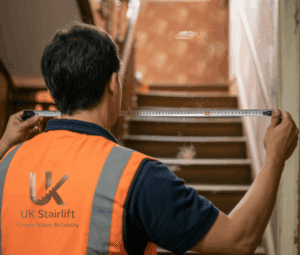
Reputable installers will visit your property to measure your staircase, assess structural considerations, discuss your mobility needs, and evaluate any potential complications. Be cautious of companies offering quotes over the phone without seeing your staircase. This often leads to inaccurate pricing or unsuitable equipment recommendations.
During the assessment, the surveyor should ask about your current and anticipated future mobility needs. They should explain different options available for your staircase type. They’ll discuss safety features and controls and provide a detailed written quotation breaking down all costs.
They should also answer your questions patiently and provide honest advice even if it means recommending a less expensive option. Understanding stairlift costs upfront helps you evaluate whether quotes are reasonable.
Warranty and Aftercare Support
Comprehensive warranty coverage and accessible aftercare separate excellent installers from mediocre ones.
Standard warranties typically cover parts for 12 months, but some companies offer extended warranties of two to five years. Clarify what the warranty includes, particularly regarding labour costs for repairs, call-out charges, and whether regular servicing is required to maintain warranty validity.
Ask about response times for repairs and whether the company offers emergency call-out services. Local installers often provide faster response times than national chains, which can be crucial if your stairlift breaks down and you’re unable to access upper floors.
Enquire about the availability of spare parts. Ask whether the company stocks commonly needed components locally.
Transparent Pricing and Payment Terms
Reputable installers provide clear, written quotations with no hidden costs.
The quote should itemise the stairlift model, installation costs, any modifications needed to your property, warranty details, and what’s included in the price such as demonstration, user manual, and initial service. Be wary of pressure tactics or claims that special discounts are only available if you sign immediately.
Payment terms vary between installers, but you should never pay the full amount upfront. Standard practice involves a deposit upon order confirmation, with the balance due upon completion and your satisfaction with the installation. Some companies offer finance options, but ensure you understand the total cost including interest before committing to payment plans.
Installation Standards and Timeframes
Ask how long installation typically takes and what the process involves. Straight stairlift installation usually takes two to four hours, whilst curved models may require a full day.
The installer should explain any preparation needed, such as clearing the staircase area. They should tell you whether they’ll protect your home during work with dust sheets and floor coverings.
Professional installers will test the stairlift thoroughly after installation. They’ll provide comprehensive demonstration of all controls and safety features. They explain maintenance requirements and ensure you feel confident using the equipment before leaving.
They should also remove all packaging and leave your home clean and tidy.
Red Flags to Watch For
Certain warning signs indicate installers to avoid.
These include reluctance to provide references or proof of insurance. Pressure to sign contracts immediately is a major red flag. Quotes significantly lower than competitors without clear explanation should raise concerns. Unwillingness to provide written quotations is unacceptable. Poor communication or difficulty reaching them during initial enquiries suggests future problems.
Finding a quality stairlift installer near you requires careful research beyond simply choosing the closest company. By verifying qualifications, assessing reputation, ensuring comprehensive aftercare, and comparing detailed quotations, you can select an installer who will provide safe, reliable installation and long-term support for your mobility needs.
If you’re still deciding whether you need a stairlift, understanding what good installation looks like helps you make an informed choice. You can also read more stairlift advice and news to stay informed about the latest developments.
Local Stairlift Installation
We survey, install and service stairlifts across Essex, Suffolk, Norfolk and Cambridgeshire, including Chelmsford, Colchester, Southend, Basildon, Brentwood, Harlow, Epping, Grays, Canvey Island, Hadleigh and Tiptree. See all the areas we cover or book a free home assessment.